

Air India AI171 Plane Crash: Fuel Cutoff Caused Dual Engine Failure, Says Preliminary Report
Introduction
On June 12, 2025, a tragic aviation accident shocked India and the world. Air India Flight AI171, flying from Ahmedabad to London, crashed just moments after takeoff. The crash killed 260 people, including passengers, crew members, and people on the ground. Only one person survived.
Now, the Aircraft Accident Investigation Bureau (AAIB) has released its preliminary report, and the main finding is both shocking and unusual: the fuel supply to both engines was cut off shortly after takeoff. This blog explains the report in simple terms and breaks down the timeline, possible causes, and what happens next.
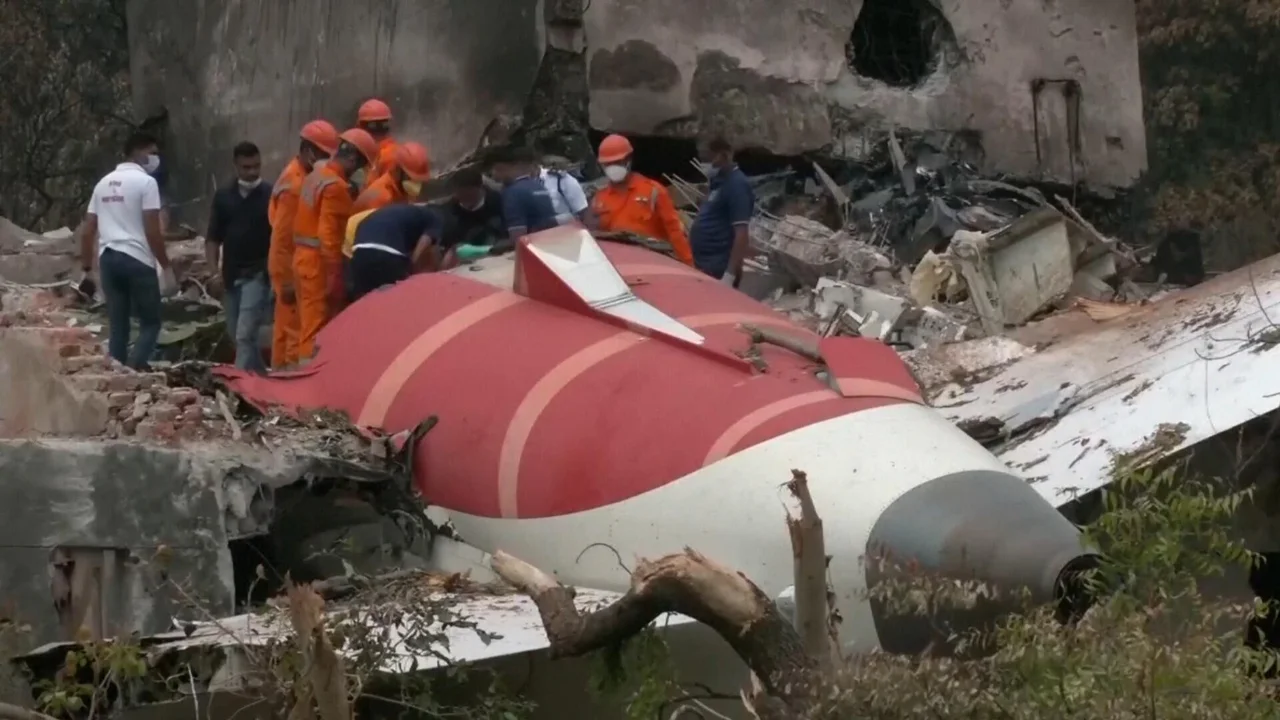
What Happened to Air India Flight AI171?
Basic Flight Information
-
Flight Number: AI171
-
Aircraft: Boeing 787-8 Dreamliner
-
Departure Airport: Ahmedabad (India)
-
Destination: London Gatwick (UK)
-
Date of Accident: June 12, 2025
-
Fatalities: 260
-
Survivors: 1
Shortly after takeoff, something went terribly wrong. Within seconds, both engines lost power. The pilots tried to restart them, but it was too late. The plane crashed into a nearby hostel building.
Timeline of the Accident
-
13:08:39 IST: The aircraft takes off from Ahmedabad airport.
-
13:08:42 IST: Just three seconds later, the fuel switch for engine one is moved to the “CUTOFF” position.
-
13:08:43 IST: The fuel switch for engine two is also set to “CUTOFF”.
-
13:08:47 IST: The aircraft’s emergency turbine system activates, confirming both engines have lost power.
-
13:09:05 IST: The pilots send a “MAYDAY” distress call.
-
Seconds later: The aircraft crashes about one kilometer from the airport.
What Are Fuel Cutoff Switches?
In every aircraft, there are fuel control switches used to start and stop fuel flow to each engine. These are usually only used:
-
After landing (to shut the engines down),
-
During certain emergency procedures.
These switches have safety locks so that they cannot be moved accidentally. Moving them in the wrong moment, especially during takeoff, can be extremely dangerous. In this case, both switches were moved to “CUTOFF” right after takeoff, which is highly unusual.
Cockpit Voice Recorder Reveals Pilot Shock
The cockpit voice recorder (CVR) captured a short but very telling conversation between the pilots. One pilot asked, “Why did you cut off the fuel?” The other replied, “I did not do so.“
This exchange shows that even the flight crew was confused about what had just happened. Neither pilot admitted to moving the switches. This confusion is a key part of the investigation.
Possible Causes Being Investigated
The AAIB report does not yet say who or what was responsible. It simply states the facts: that the fuel switches were moved and both engines lost power. Investigators are now looking at three main possibilities:
1. Human Error
Did a pilot move the switches by mistake? That seems unlikely, given the safety locks and pilot training. However, it cannot be ruled out yet.
2. Mechanical or Design Failure
There was an earlier advisory issued in 2018 by aviation authorities about a possible flaw in the locking system of these switches. If the locks failed, the switches could move more easily—even without someone intending to. Air India had not performed checks based on that advisory, as it was not mandatory.
3. Intentional Action
While rare, investigators must consider all options. Could this have been a case of deliberate sabotage or intentional shutdown? As of now, there is no evidence to support this theory, but it will be investigated thoroughly.
Why Was the Advisory Ignored?
In 2018, the Federal Aviation Administration (FAA) warned airlines about possible problems with the fuel switch locking mechanisms. However, this advisory was not a mandatory directive, so Air India, like many airlines, did not perform inspections based on it.
This incident has now raised serious questions: Should that advisory have been made mandatory? Could this accident have been prevented if checks were done?
Aircraft History and Maintenance
The aircraft involved was delivered in 2017 and had a good maintenance history. According to the report:
-
No fuel switch problems were reported before.
-
The throttle control unit was replaced in 2019 and 2023 (routine maintenance).
-
The aircraft was last serviced two weeks before the accident.
So far, there is no evidence of recent mechanical trouble or ignored faults specific to this aircraft.
The Tragic Outcome
The plane crashed into a medical college hostel, killing 19 people on the ground. The fire that followed destroyed large parts of the building. Most of the passengers onboard also died on impact.
The only survivor was a male passenger seated near the emergency exit. He was rescued by firefighters and is recovering.
Reactions from Aviation Experts
Aviation experts worldwide are calling this event extremely rare and disturbing. A dual engine failure just after takeoff is highly unusual, especially without any warning signs or weather issues.
Some experts believe this will change safety procedures, especially around switch safety design and inspection routines.
Investigation: What Happens Next?
The AAIB is working closely with international agencies, including:
-
The FAA (USA)
-
The NTSB (USA)
-
Boeing (aircraft maker)
-
GE (engine maker)
They will now examine:
-
The fuel switches and locking mechanism
-
Cockpit systems and flight controls
-
Aircraft design and potential flaws
-
Pilot actions and training records
A final report is expected within the next 12 months. Until then, no official blame or cause will be confirmed.
Lessons for the Aviation Industry
1. Advisory Follow-Up Must Be Stronger
Optional advisories like the one from 2018 must be taken more seriously. Even if not mandatory, they can prevent tragedies.
2. Safety Designs Can Always Improve
Switches that control something as critical as fuel flow must be 100% tamper-proof, even against accidental or mechanical movement.
3. Transparent Investigations Save Lives
Sharing findings early, as AAIB has done, allows the global aviation community to learn quickly and improve safety standards everywhere.
Simple Summary Table
| Detail | Information |
|---|---|
| Date | June 12, 2025 |
| Flight | Air India AI171 |
| Route | Ahmedabad to London |
| Aircraft | Boeing 787-8 Dreamliner |
| Engine Failure Time | 3 seconds after takeoff |
| Cause (so far) | Fuel cutoff switches activated |
| Survivors | 1 out of 260 people |
| Ground Fatalities | 19 |
| Final Report | Expected by mid-2026 |
| Key Issue | Fuel control switch movement |
The Air India AI171 crash is a painful reminder that in aviation, even small components can make the difference between life and death. While we still don’t know exactly why the fuel switches moved, this tragedy has already taught the world valuable lessons.
As investigators continue their work, the goal is clear: to understand the cause, fix any faults, and make sure nothing like this happens again.
